RELUGOLIX: A NEW DRUG FOR UTERINE FIBROMA
Reading Time: 4 minutes
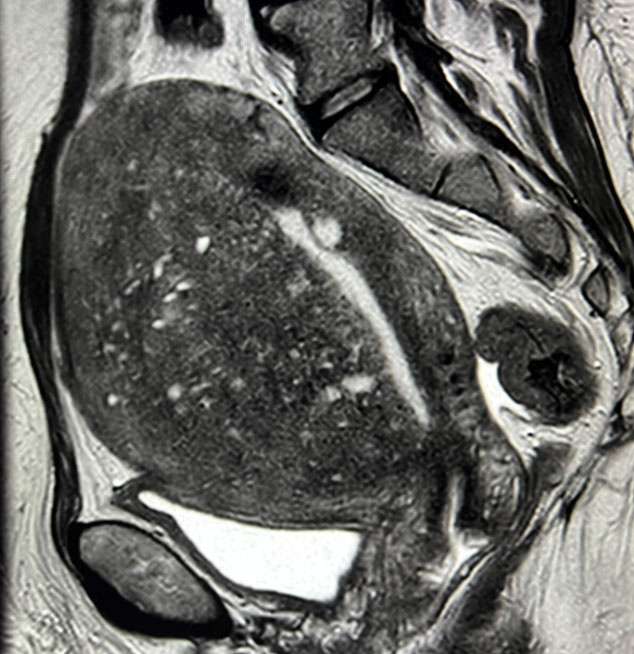
Uterine fibroids represent a common benign tumour pathology in premenopausal women. They arise from uterine smooth muscle cells and are characterised by large amounts of extracellular matrix containing collagen, fibronectin and proteoglycans. They have a cumulative incidence at the age of 50 years ranging from 70-80%. In 20-30% of cases they present with associated symptomatology, in 10% of cases they may be associated with infertility and in 30-50% of cases they lead the woman and the clinician to opt for surgical treatment. The symptomatic pictures are related to three main problems: abnormal uterine bleeding with menstrual periods of increased duration and volume, the resulting anaemia and mass-related complaints such as pelvic pain, abdominal distension, dyspareunia, urination disorders, constipation or infertility. This has a strong impact on a woman's quality of life and can lead to states of anxiety and depression. As young, working-age women are affected, the physical and mental/emotional discomfort associated with uterine fibromatosis impacts not only on the woman's quality of life but also on her working life, with reduced quality at work, limited performance and loss of working time (sick leave).
As far as clinical management is concerned, one can opt for wait-and-see management, medical treatment or surgical treatment, which involves myomectomy or hysterectomy as appropriate. The woman must be informed about her options, and in recent years there has been an increasing desire on the part of women to preserve their uterus. Medical treatment aims to reduce and control symptoms. Pharmacological options include the use of non-hormonal treatments, such as tranexamic acid, oral contraceptives, levonorgestrel-releasing IUDs, GnRh analogues and selective progesterone receptor modulators. Some of these, such as oral contraceptives or progestins, are used off-label, in the absence of real evidence. The GnRh analogues, which are excellent drugs used mainly to accompany women to surgery, show numerous limitations, apart from the initial flare-up effect, they can only be used for a limited time of about 6 months due to the hypo-estrogenism they create, with consequences on the loss of bone mineral density and vasomotor symptoms. In this context, new drugs for the treatment of uterine fibromatosis have been introduced in recent years: GnRh antagonists such as Elagolix, Relugolix, Linzagolix. The latter have pure competitive antagonist activity on GnRH receptors, resulting in a transient blockade of pituitary activity, producing an immediate halt in the release of the gonadotropins FSH and LH. GnRH receptor antagonists induce an immediate reduction in hormone release and thus a rapid onset of therapeutic action; interestingly, their use is not related to the usual 'flare-up' adverse event induced by the administration of GnRH agonists.
Relugolix falls into this pharmaceutical category and is an orally active non-peptide GnRH receptor antagonist, recognised as a safe and effective therapeutic option in women with symptomatic uterine fibromatosis. It possesses excellent affinity and potent antagonist activity for GnRH receptors. It competitively inhibits LH and FSH secretion, inducing a consequent decrease in E2 and progesterone levels, preventing hormone-dependent proliferative effects on the endometrium, resulting in reduced abnormal uterine bleeding, and leading to secondary amenorrhoea. It has a number of advantages over GnRh agonists, such as being fast-acting, having no flare-up effect, being orally administered in a single daily dose, and being able to be discontinued at any time. The first randomised study on the use of relugolix in women with symptomatic fibroids was published by Hoshiai et al. in 2017. In this randomised, double-blind, placebo-controlled study, the effect of this GnRH receptor antagonist in improving the incidence of abnormal uterine bleeding in Japanese women with uterine fibroids was evaluated. Analysis of the data showed a dose-dependent decrease in both fibroid and uterine volume. After discontinuation of Relugolix, E2 levels increased rapidly with a rapid secondary return of menses. Relugolix is a safe and well-tolerated drug with mild-to-moderate adverse events, not dangerous for patients. Adverse effects of the use of GnRh antagonists include loss of bone mineral density and vasomotor symptoms such as hot flushes. These effects can be ameliorated by replenishing low levels of oestrogen and progesterone, i.e. by administering concomitant add-back therapy. An oral fixed-dose combination of relugolix/estradiol/norethisterone acetate 40/1/0.5 mg in women with symptomatic uterine fibroids has recently been proposed and approved. It is approved in the EU and can be taken without interruption until the menopause, at which time discontinuation should be considered. Treatment has been shown to substantially reduce menstrual bleeding in women with AUB associated with uterine fibroids; it has also led to amenorrhoea in most patients, improvement in bleeding and pelvic discomfort, improvement in anaemia, a decrease in fibroid-related pain and a reduction in uterine volume, but not in fibroids.
Relugolix therefore appears to be an excellent therapeutic option in young women with a desire to become pregnant, being able to treat the symptoms related to uterine fibromatosis and to improve the uterine cavity with a view to future pregnancy planning, in women aged >45 years with a desire to preserve the uterus, or in women who have to undergo surgical treatment, restoring a good haemoglobin level and reducing the uterine volume.
References
E A Stewart, et al. Epidemiology of uterine fibroids: a systematic review. OG. 2017 Sep;124(10):1501-1512. doi: 10.1111/1471-0528.14640. Epub 2017 May 13.
Juan C Arjona Ferreira, et al. Development of relugolix combination therapy as a medical treatment option for women with uterine fibroids or endometriosis. FS Rep. 2022 Nov 21;4(2 Suppl):73-82. doi: 10.1016/j.xfre.2022.11.010. eCollection 2023 Jun
Kanchan Puri, et al. Submucosal fibroids and the relation to heavy menstrual bleeding and anaemia. J Obstet Gynecol. 2014 Jan;210(1):38.e1-7. doi: 10.1016/j.ajog.2013.09.038. Epub 2013 Sep 28.
Klara Hasselrot, et al. Investigating the loss of work productivity due to symptomatic leiomyoma. LoS One
. 2018 Jun 11;13(6):e0197958. doi: 10.1371/journal.pone.0197958. eCollection 2018.
Yahiya Y Syed. Relugolix/Estradiol/Norethisterone (Norethindrone) Acetate: A Review in Symptomatic Uterine Fibroids. Drugs. 2022 Oct;82(15):1549-1556. doi: 10.1007/s40265-022-01790-4. Epub 2022 Nov 4.
Linda C Giudice, et al. A Plain Language Summary to learn about relugolix combination therapy for the treatment of pain associated with endometriosis. ain Manag. 2023 Nov;13(11):631-640. doi: 10.2217/pmt-2023-0052. Epub 2023 Nov 20.
Linda C Giudice MD, et al. Once daily oral relugolix combination therapy versus placebo in patients with endometriosis-associated pain: two replicate phase 3, randomised, double-blind, studies (SPIRIT 1 and 2). Lancet. 2022 Jun 18;399(10343):2267-2279. doi: 10.1016/S0140-6736(22)00622-5.
Lingli Xin, et al. Efficacy and safety of oral gonadotropin-releasing hormone antagonists in moderate-to-severe endometriosis-associated pain: a systematic review and network meta-analysis. h Gynecol Obstet. 2023 Oct;308(4):1047-1056. doi: 10.1007/s00404-022-06862-0. Epub 2023 Jan 19.
Meera Viswanathan, et al. Management of uterine fibroids: an update of the evidence. id Rep Technol Assess (Full Rep). 2007 Jul:(154):1-122.
M L Rocca, et al. Relugolix for the treatment of uterine fibroids. pert Opin Pharmacother. 2020 Oct;21(14):1667-1674. doi: 10.1080/14656566.2020.1787988. Epub 2020 Jul 17.